President Trump boldly claims King Charles agrees with him ‘even more than I do’ on blocking Iran’s nuclear ambitions, raising questions about royal neutrality and alliance strains.
Story Snapshot
- Trump states on April 28, 2026, that King Charles strongly backs U.S. efforts to prevent Iran from obtaining nuclear weapons.
- UK government publicly refuses full endorsement of Trump’s hardline Iran policy, highlighting transatlantic policy gaps.
- Claim made amid King Charles’s Washington visit, personalizing diplomacy on a critical global threat.
- No confirmation from Buckingham Palace, underscoring King’s apolitical role as constitutional figurehead.
Trump’s Statement During Royal Visit
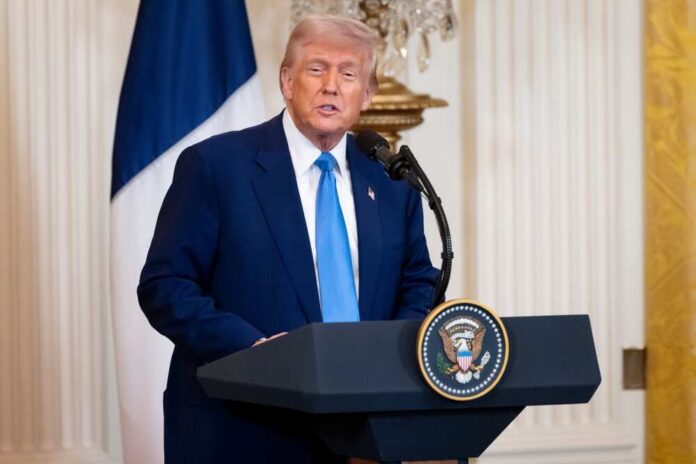
On April 28, 2026, President Donald Trump declared that Britain’s King Charles agrees with his stance against Iran acquiring nuclear weapons, adding the hyperbolic note that Charles “agrees with me even more than I do.” Trump made this remark in Washington during King Charles’s visit, tying it to ongoing bilateral talks. The statement aims to rally support for America’s maximum pressure campaign on Tehran. This approach echoes Trump’s 2018 withdrawal from the Obama-era JCPOA nuclear deal, which he views as a failed concession to Iran. Conservatives applaud this firm resolve to protect global security through strength, contrasting it with past diplomatic weaknesses that emboldened aggressors.
Iran’s Nuclear Threat and Historical Context
Iran’s nuclear program originated in the 1950s with U.S. assistance under the Shah but shifted post-1979 Revolution toward weapons development under heavy sanctions. Recent escalations feature near-weapons-grade uranium enrichment and Israeli strikes on facilities. Trump leverages the King’s purported support to justify sustained sanctions and potential military options. This hardline policy prioritizes American interests and ally safety over multilateral deals that critics say rewarded Iran’s deception. With Republicans controlling Congress, such resolve advances limited government intervention abroad focused on deterrence rather than endless negotiations.
UK Response Signals Policy Divergence
The UK Foreign Office explicitly refused full alignment with Trump’s Iran efforts, favoring diplomacy under Prime Minister Keir Starmer’s Labour government. King Charles, as a constitutional monarch, maintains strict political neutrality with no policy role or public response noted. This distancing tests the U.S.-UK special relationship post-Brexit, amid shared non-proliferation goals but tactical differences. Americans on both sides of the aisle grow wary of elite diplomatic games that prioritize alliances over national security imperatives. Trump’s direct style cuts through such bureaucracy, resonating with those frustrated by globalist entanglements.
Implications for Alliances and Energy Security
Short-term, Trump’s claim creates diplomatic awkwardness for the UK royals and amplifies media focus on unverified endorsements. Long-term, it hardens U.S. policy, complicating JCPOA revival and spiking oil market volatility from sanctions. Affected parties include U.S.-UK publics questioning alliance strength, Iran’s regime under pressure, and energy sectors facing supply risks. Heightened Middle East tensions underscore the need for principled leadership that upholds traditional American values of strength and self-reliance. Bipartisan distrust in federal overreach abroad fuels demands for accountability from so-called deep state influencers.
Sources:
Trump says King Charles does not want Iran to have nuclear weapon – Japan Today
Trump says King Charles does not want Iran to have nuclear weapon – The Straits Times
Trump claims King Charles support on Iran – POLITICO