President Trump’s sudden two-week pause on striking Iran shows how quickly a crisis can pivot when America’s energy lifeline—and a credible opening for a deal—hits the table.
Quick Take
- Trump delayed a planned U.S. strike on Iran for two weeks after Pakistan’s prime minister urged a temporary ceasefire to make room for talks.
- The pause is conditional: Iran must fully reopen the Strait of Hormuz for oil shipments, a central pressure point for global energy markets.
- Trump said the U.S. received a “workable” 10-point proposal from Iran, shifting the immediate focus from airstrikes to negotiation.
- The truce remains fragile, with limited public detail on the proposal and warnings that the underlying conflict is not resolved.
What Trump Agreed to—and the Condition That Matters Most
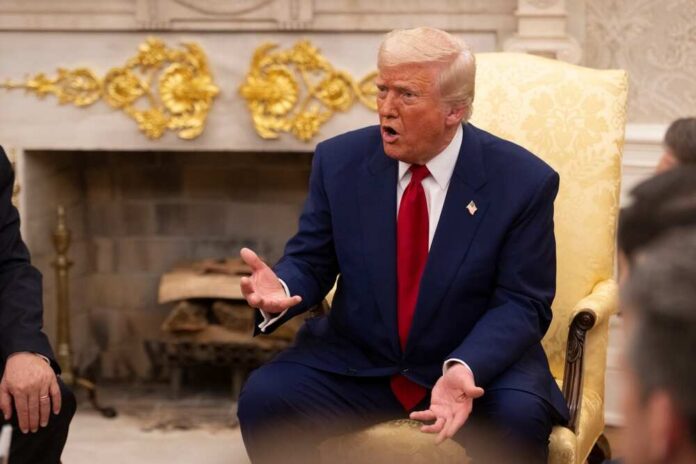
President Donald Trump announced Tuesday evening, April 8, 2026, that he will delay a planned strike on Iran for two weeks, effectively backing a “double-sided ceasefire” arrangement. The central condition is practical and measurable: Iran must fully reopen the Strait of Hormuz for oil shipments. Trump also said Iran delivered a 10-point proposal he views as a workable basis for negotiations, setting up a high-stakes diplomatic sprint rather than immediate escalation.
Pakistan’s prime minister played the key intermediary role, pushing for a two-week pause roughly 90 minutes before Trump’s stated 8:00 p.m. Eastern deadline. Reports indicate talks are expected to proceed in Islamabad, positioning Pakistan as a broker in a confrontation that could have spilled rapidly into regional warfare. For Americans watching energy prices and inflation, the Strait’s status is not an abstract foreign-policy detail—it is directly tied to the cost of living.
The Deadline Drama: From Threats to a Negotiation Window
The day’s timeline underscored how volatile the moment had become. Earlier Tuesday, Trump used social media to warn Iran that strikes could hit major infrastructure—bridges, desalination plants, and energy facilities—if the Strait remained blocked. That posture created maximum leverage but also raised the risk of rapid escalation and civilian hardship. By the evening, Trump pivoted to a time-limited pause, saying U.S. objectives had been met and negotiations could finalize around Iran’s proposal.
Based on the reporting available, the details of the 10-point proposal remain thin, which limits the public’s ability to judge its seriousness or enforceability. What is clearer is the bargaining framework: Iran seeks relief and security-related concessions, while the U.S. is prioritizing immediate, verifiable movement on the Strait and broader de-escalation. For conservatives skeptical of open-ended foreign entanglements, the two-week clock functions as a hard test—either there’s compliance and progress, or pressure returns.
Why Pakistan—and Reports of China’s Backing—Change the Strategic Picture
Pakistan’s unexpected role matters because it introduces a channel outside the usual U.S.-Iran back-and-forth and the traditional European diplomatic track. Reports also point to possible Chinese backing for Pakistan’s effort, which could cut two ways for Washington: it may help deliver Iranian compliance in the short run, but it also highlights how rival powers seek influence when U.S. policy shifts in real time. Either way, the broker’s credibility will be judged by results: Strait access and durable verification.
The Stakes for Americans: Energy Costs, Credibility, and Government Competence
The Strait of Hormuz is a narrow chokepoint with outsized impact on global oil flows, so even a temporary disruption can rattle markets and household budgets. That is why the reopening condition is central—not just geopolitically, but economically. The broader domestic frustration, shared by many on the right and left, is that Washington often looks reactive rather than prepared. This episode is a reminder that decisions made under deadline pressure can carry immediate consequences for inflation, stability, and U.S. credibility abroad.
What to Watch Over the Next Two Weeks
The next phase depends on verification and follow-through. Reports describe the ceasefire as fragile, with Iran signaling that “war is not over,” even as talks begin. The public still lacks clarity on the full contents of the 10-point proposal, how compliance will be measured, and what “reopening” the Strait means operationally and safely. If those gaps persist, skepticism will grow across the political spectrum—especially among voters tired of vague promises and costly outcomes.
For now, Trump has chosen a constrained pause instead of immediate escalation, tying U.S. action to a concrete condition that directly affects global energy supply. If the Strait stays open and a workable agreement emerges, the administration can argue it used leverage to protect U.S. interests without drifting into another open-ended conflict. If the deal collapses, the two-week delay will be remembered as a test of whether diplomacy can deliver what force threatens—real, verifiable results.
Sources:
Trump to delay Iran strike decision; ceasefire talks emerge
Trump to delay Iran strike decision; ceasefire talks emerge
Trump to delay Iran strike decision; ceasefire talks emerge
Trump to delay Iran strike decision; ceasefire talks emerge
Trump to delay Iran strike decision; ceasefire talks emerge