California’s leadership is trying to turn a Medicare fraud firestorm into a “civil rights” story—right as federal investigators zero in on what Dr. Mehmet Oz calls the nation’s worst hotspot.
Quick Take
- CMS Administrator Dr. Mehmet Oz publicly alleged an epicenter of hospice and home-care fraud in Los Angeles tied to $3.5 billion in losses, citing an unusually dense cluster of providers.
- Gov. Gavin Newsom’s office responded by filing a federal civil rights complaint, arguing Oz’s comments unfairly targeted Armenians and harmed local businesses.
- California officials point to years of state action, including a 2021 law halting new hospice licenses and hundreds of license revocations tied to fraud.
- A U.S. House Energy & Commerce Committee hearing on Medicare and Medicaid fraud is scheduled for Feb. 3, 2026, keeping pressure on Sacramento and Washington alike.
Oz’s Fraud Claim Puts Los Angeles Hospice Billing Under a National Spotlight
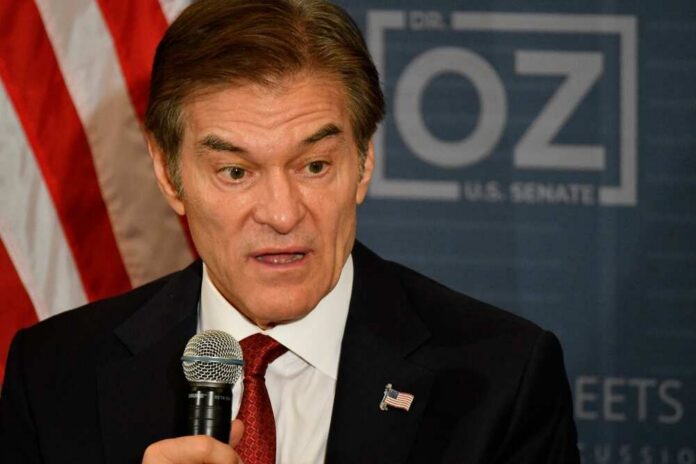
Dr. Mehmet Oz, now serving as Administrator of the Centers for Medicare & Medicaid Services, triggered the latest clash after posting a video from Los Angeles’ Van Nuys neighborhood. Oz alleged $3.5 billion in hospice and home-care fraud, describing a four-block area with 42 hospices as a focal point. Oz framed California as the “worst” case in a national problem and promised aggressive enforcement with law enforcement partners.
Oz’s choice of setting also became part of the controversy. Reports describe the video being filmed in front of an Armenian bakery, with Oz calling out Armenian script on local signs while asserting that much of the fraud was run by a “Russian Armenian mafia.” The allegation drew immediate backlash because it connected criminality to an ethnic label rather than to specific named operators, and it placed a neighborhood business in the center of a national political fight.
Newsom’s Civil Rights Complaint Shifts the Debate From Fraud to Rhetoric
Gov. Gavin Newsom’s press operation answered Oz by filing a civil rights complaint with the U.S. Department of Health and Human Services’ Office for Civil Rights. The complaint argues Oz’s statements were discriminatory and racially charged, and that they harmed Armenian Americans and local commerce. One business owner reported a steep drop in sales after the video drew attention, underscoring how fast reputational damage can spread when government officials speak broadly.
The Armenian National Committee of America filed its own complaint and criticized Oz’s approach as scapegoating. That matters politically because it creates two parallel tracks: a fraud-enforcement track and a civil-rights track. Even if investigators eventually prove serious fraud concentrated in certain providers, the rhetoric question will remain separate: whether a federal official should publicly associate an ethnic community with criminal activity without naming specific suspects or presenting documentation.
California’s Hospice Crackdown Is Real—But the Scale Question Isn’t Resolved Publicly
Newsom’s office points to state actions that began years before Oz took the CMS post. California signed a 2021 law halting new hospice licenses amid mounting fraud concerns, and the state has revoked more than 280 hospice licenses while examining hundreds more. That record complicates any claim that Sacramento did “nothing.” At the same time, the public still lacks a clear, unified accounting that reconciles Oz’s $3.5 billion figure with what has been proven in court or detailed in public audits.
Oz separately sent Newsom a letter dated Jan. 27 requesting extensive Medi-Cal program integrity data—dozens of questions on eligibility, oversight, and fraud controls, including hospice and home health. That letter suggests CMS is not relying only on viral video claims, but pushing for documentation and measurable accountability. For taxpayers frustrated by years of waste, this is the practical hinge point: whether California can produce transparent data showing strong controls, or whether the federal government will justify deeper audits and enforcement actions.
House Hearing and Federal-State Tensions Raise the Stakes for Patients and Taxpayers
The House Energy & Commerce Committee is scheduled to hold a Feb. 3, 2026 hearing titled “Common Schemes, Real Harm: Examining Fraud in Medicare and Medicaid,” with California expected to feature prominently. Hearings like this tend to pressure agencies to quantify losses, name schemes, and specify remedies—exactly the detail missing from broad social-media accusations. Oz has said that fixing California would help the nation, implying that patterns in one state can inform enforcement nationwide.
The biggest unresolved issue is evidence transparency. Reports note Oz has not publicly released a list of implicated operators tied to his claims, and the state has not published a full roster in a way that satisfies critics who want line-by-line accountability. For conservatives who watched years of bureaucratic evasion, the constitutional concern isn’t about policing fraud—it’s about government power being used carefully, with due process, while still defending the public purse. The next steps from OCR, CMS, and Congress will determine which side produces verifiable facts.
Sources:
Gavin Newsom files civil rights complaint against CMS’ Dr. Oz
Escalation in fraud conversations in California; fraud hearing forthcoming in the House
Gavin Newsom-Dr. Oz feud: fraud allegations
Mehmet Oz on California Gov. Gavin Newsom amid state’s hospice fraud surge: “We are talking”