
Federal immigration enforcement policies face renewed scrutiny as protests erupt nationwide, challenging the Trump administration’s aggressive ICE operations.
Story Overview
- Thousands marched in NYC against ICE after Renee Nicole Good’s death.
- Protesters challenge Trump’s “Big Beautiful Bill” for expanded ICE powers.
- Homeland Security’s narrative on Good’s death is under scrutiny.
- Nationwide protests demand accountability and policy change.
Massive Protest in NYC Challenges Federal ICE Policies
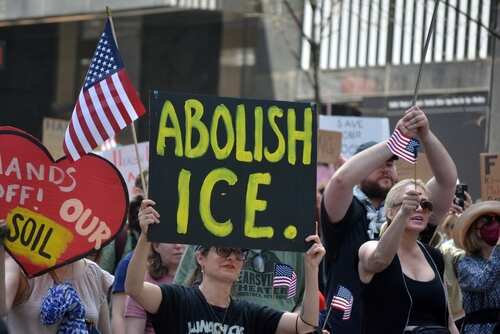
On January 11, 2026, thousands of demonstrators took to the streets of Midtown Manhattan, protesting the recent killing of Renee Nicole Good by ICE agent Jonathan Ross in Minneapolis. The march, which began near Central Park and passed Trump Tower, highlighted opposition to ICE’s expanded enforcement powers under President Trump’s “Big Beautiful Bill.” Protesters demanded accountability for Good’s death and called for an end to aggressive ICE operations.
Participants described the protest as the largest in NYC since Good’s death, reflecting a significant public backlash against federal immigration policies. Demonstrators carried signs with messages like “No ICE” and “No justice, no peace,” criticizing ICE as an occupying force. The route of the march, which included passing iconic sites like Trump Tower, was symbolic of the direct challenge to national policies.
Background and Rising Tensions
The protests are part of a growing movement against ICE, which has faced criticism for aggressive enforcement tactics since its inception in 2003. The “Big Beautiful Bill” significantly increased ICE’s budget at the expense of social programs, sparking outrage among activists. This policy shift is seen as diverting funds from essential services to militarization and foreign interventions.
Following Good’s death, protests erupted in cities across the country. DHS Secretary Kristi Noem described Good as a “domestic terrorist,” claiming she charged ICE agents with her vehicle. However, viral video footage reportedly contradicts this account, fueling public distrust and calls for independent investigations into the incident.
Watch:
Nationwide Mobilization and Political Implications
The NYC protest is part of a broader nationwide mobilization led by the ICE Out For Good coalition, which includes Indivisible and other activist groups. The coalition’s call for a weekend of action has seen protests in states like California, Connecticut, and Minnesota. These protests, some marked by confrontations with law enforcement, underscore the tension between federal and local authorities over immigration enforcement.
As the Trump administration continues to push for expanded ICE operations, local leaders like NYC Mayor Zohran Mamdani and Governor Kathy Hochul have pledged to resist federal efforts to militarize city streets. This resistance sets the stage for potential legal battles over the balance of federal and local powers in immigration enforcement.
NYC anti-ICE protest draws 2,000 in latest unrest since shooting death of Renee Nicole Good https://t.co/hYKnbUgWGS pic.twitter.com/rjRiY1DOit
— New York Post (@nypost) January 11, 2026
The protests and the scrutiny of DHS’s narrative regarding Good’s death raise significant questions about the future of ICE and federal immigration policy. The ongoing public demonstrations may prompt policy discussions in Congress and state legislatures, potentially leading to reforms or increased oversight of ICE operations.
Sources:
Show of force: Thousands march in Midtown against ICE and Trump after killing of Renee Good
ICE Out For Good coalition announces nationwide weekend of action demanding accountability